Ensuring compliance within Apache Kafka® clusters is a critical undertaking, particularly for organizations handling sensitive data. This checklist delves into the nuances of audit logging, offering a comprehensive guide to help you meet regulatory requirements and maintain a robust security posture within your Kafka environment.
Understanding Compliance in Kafka Clusters
Understanding compliance within Apache Kafka clusters is fundamental for any organization leveraging this powerful data streaming platform, especially when dealing with sensitive information. Compliance extends beyond simple security measures, encompassing a broader set of standards and protocols designed to ensure data integrity, privacy, and accountability. A well-defined compliance strategy for your Kafka cluster is essential to mitigate risks, avoid legal repercussions, and maintain trust with your stakeholders.
Importance of Compliance for Financial Services
For financial services, the importance of compliance in Apache Kafka® cannot be overstated. These institutions operate under stringent regulatory frameworks that demand meticulous data governance and the ability to demonstrate immutability and data access controls. Adhering to these compliance requirements is not merely a legal obligation but a cornerstone of maintaining customer trust and operational integrity. Robust audit trails are vital for demonstrating accountability and transparency in real-time data processing.
Defining Audit Logging in Apache Kafka®
Defining audit logging in Apache Kafka® involves capturing and recording security events and critical actions performed within the Kafka cluster. This essential component of Kafka compliance provides a comprehensive record of who accessed what data, when, and how, forming crucial audit trails. Effective audit logging empowers compliance teams to monitor data access, track administrative operations, and identify potential security breaches, making it an indispensable tool for maintaining a secure and accountable Kafka platform.
Key Compliance Regulations for Kafka
Several key compliance regulations for Kafka necessitate robust audit logging and data governance practices, especially when processing sensitive information on your data streaming platforms. Meeting these regulatory demands requires a meticulous approach to authentication, authorization using ACLs and RBAC, data encryption, and the establishment of a comprehensive audit logging architecture to provide irrefutable evidence of compliance to meet regulatory obligations. Key regulations that impose strict rules on data handling, privacy, and security include:
- GDPR — data privacy and the right to access/erasure
- CCPA — consumer data privacy
- SOX — financial reporting integrity and access controls
- HIPAA — protected health information safeguards
Creating an Effective Compliance Checklist
Essential Components of a Compliance Checklist
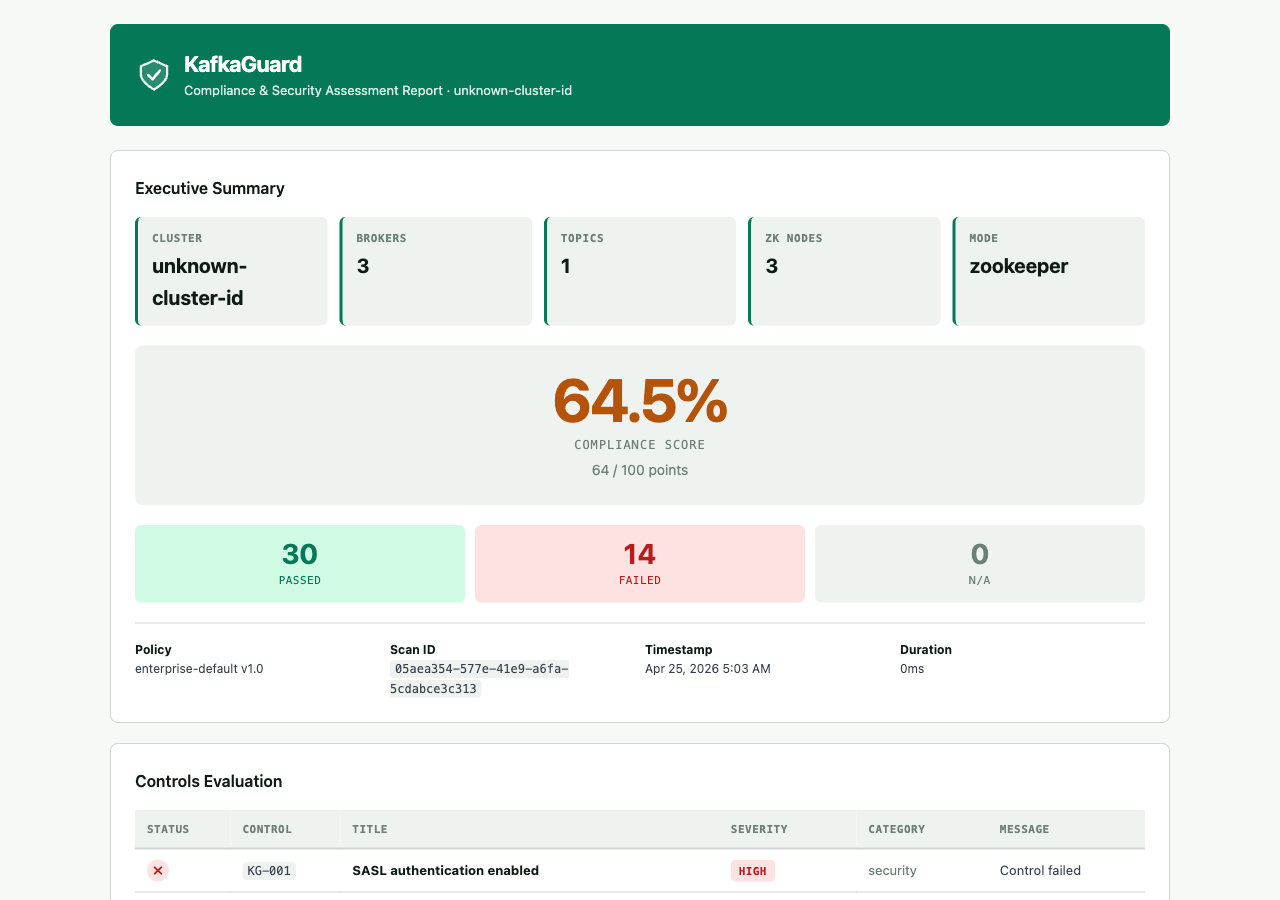
An effective compliance checklist for Apache Kafka® should encompass several essential components to ensure comprehensive audit logging and adherence to regulatory requirements. At a minimum it should cover:
- Authentication & authorization — clearly defined criteria, leveraging ACLs and RBAC to manage permissions across Kafka topics
- Encryption — requirements for data both in transit and at rest
- Audit data capture & storage — specific guidelines for what is captured, how, and where it is retained
- Review procedures — a defined cadence for reviewing audit trails
Together these make the checklist an indispensable tool for maintaining a robust security posture within the Kafka cluster and demonstrating compliance to oversight bodies.
Best Practices for Maintaining Compliance
Adhering to best practices is crucial for maintaining ongoing compliance within your Apache Kafka® environment. This involves implementing a robust audit logging architecture that captures every significant security event and administrative action across the Kafka cluster. Regular reviews of audit data are paramount, allowing compliance teams to proactively identify and address potential vulnerabilities or deviations from established policies. Furthermore, integrating the Kafka platform with existing security monitoring tools and incident response protocols ensures a holistic approach to security, significantly enhancing the effectiveness of your compliance program and demonstrating a commitment to meet regulatory obligations.
Regular Audits and Their Importance
Regular audits are of paramount importance in ensuring continuous compliance within Apache Kafka® clusters. These audits serve as a critical mechanism to verify that the implemented audit logging and security controls are functioning as intended and that the organization remains aligned with relevant compliance requirements. By meticulously reviewing audit trails, organizations can detect anomalies, identify unauthorized data access attempts, or pinpoint misconfigurations that could lead to security breaches. Such proactive measures are vital for financial services and other regulated industries, enabling them to demonstrate due diligence, maintain data governance, and promptly respond to any compliance gaps, thereby safeguarding the integrity and security of their real-time data streaming platform.
Audit Logging Architecture in Apache Kafka®
Overview of Kafka Cluster Architecture
The architecture of an Apache Kafka® cluster is inherently distributed and designed for high throughput and fault tolerance, making it an ideal data streaming platform for real-time data processing. At its core, a Kafka cluster consists of several broker instances, which are responsible for storing Kafka topics as partitions and serving data to consumers and producers. Each partition is an ordered, immutable sequence of records, allowing for robust audit trails. Understanding this distributed nature is crucial when designing an audit logging architecture, as audit events must be captured across all brokers and integrated into a cohesive compliance framework to meet regulatory obligations, especially for financial services. Comprehensive observability of this architecture is vital for maintaining Kafka compliance.
Implementing Audit Logging in the Kafka Platform
Implementing audit logging in the Kafka platform requires a strategic approach that integrates seamlessly with the existing architecture to capture essential security events and data access patterns. This involves configuring authentication and authorization mechanisms, such as ACLs and RBAC, to control permissions for various Kafka topics and administrative actions. A robust audit logging solution will capture every significant event, from producer writes to consumer reads, and administrative changes to broker configurations. These audit data points are then stored securely, often leveraging Kafka itself as a transport mechanism to a dedicated storage layer or object storage, ensuring immutability and providing a reliable source for compliance teams to review audit trails and conduct incident response.
Scaling Audit Logging for High Workload
Scaling audit logging to accommodate high workloads in an Apache Kafka® cluster is paramount to maintaining effective Kafka compliance without introducing performance bottlenecks. As the volume of real-time data streaming increases, the audit logging pipeline must be designed to handle a corresponding surge in audit events. This often involves using dedicated, high-throughput Kafka topics for audit data, ensuring that the logging process does not impact the primary data plane. Leveraging cloud-native Kafka solutions and tiered storage can further optimize performance and cost-effectiveness, allowing older data to be moved to more economical storage while still being accessible for compliance audits. Implementing effective partitioning strategies and ensuring low latency for audit data processing are also key considerations for a robust and scalable audit logging architecture.
Security Measures for Kafka Compliance
Authentication and Authorization Best Practices
Implementing robust authentication and authorization best practices is fundamental for achieving comprehensive Kafka compliance within your Apache Kafka® clusters. This involves leveraging mechanisms such as OAuth for secure user authentication and implementing Access Control Lists (ACLs) or Role-Based Access Control (RBAC) to define granular permissions for Kafka topics, groups, and administrative operations. Properly configured authentication ensures that only legitimate users and services can interact with the data streaming platform, while authorization dictates precisely what actions they are permitted to perform, thereby preventing unauthorized data access and safeguarding sensitive information within the cluster. Regular reviews of these permissions are essential to maintain a strong security posture.

Encryption Strategies for Data Streaming
Effective encryption strategies are paramount for securing data streaming within Apache Kafka® and meeting stringent compliance requirements, particularly for financial services. This encompasses various aspects, including:
- Encryption of data in transit — typically achieved through TLS/SSL between producers, consumers, and Kafka brokers.
- Encryption of data at rest — often handled at the file system or object storage level where Kafka stores its data.
Ensuring end-to-end encryption throughout the entire data pipeline, from source to destination, provides a critical layer of protection against eavesdropping and unauthorized access. A comprehensive encryption strategy is a cornerstone of data governance and an indispensable component for maintaining Kafka compliance in modern Kafka environments.
Monitoring Security Events in Real-Time
Monitoring security events in real-time is crucial for proactive incident response and maintaining continuous Kafka compliance within your Apache Kafka® cluster. This involves integrating the Kafka platform with security monitoring tools to capture and analyze audit events, unauthorized data access attempts, and configuration changes across all brokers and Kafka topics. Establishing real-time alerts for suspicious activities allows compliance teams to rapidly detect and respond to potential security breaches. A robust observability framework, including detailed audit trails and security analytics, is essential for demonstrating accountability, identifying vulnerabilities, and ensuring the integrity of the real-time data streaming platform against evolving threats.
Optimizing Performance and Latency
Managing Latency in Kafka Clusters
Managing latency in Apache Kafka® clusters is a critical aspect of optimizing performance, especially for real-time data streaming applications where low latency is paramount. High latency can severely impact the effectiveness of financial services applications and other time-sensitive operations. Strategies involve optimizing Kafka topic configurations, such as batching and compression settings, and ensuring efficient network communication between producers, consumers, and brokers. Monitoring broker performance, disk I/O, and network bandwidth through comprehensive observability tools allows compliance teams and operations personnel to identify and mitigate latency bottlenecks, ensuring the Kafka cluster operates efficiently while still adhering to compliance requirements and providing robust audit logging.
Strategies for Low Latency Data Streaming
Achieving low latency data streaming within an Apache Kafka® cluster requires a multifaceted approach that optimizes every component of the data pipeline. This includes judicious partitioning of Kafka topics to distribute workload effectively, ensuring that data is processed swiftly across the cluster. Utilizing modern Kafka engine features, such as optimized broker storage and efficient consumer client implementations, can significantly reduce processing delays. Furthermore, leveraging cloud-native Kafka solutions with private networking and carefully selected hardware for brokers can further enhance performance. Implementing these strategies helps maintain a high-throughput, low-latency data plane, crucial for applications that demand real-time responsiveness while upholding stringent Kafka compliance standards.
Balancing Compliance with Performance Needs
Balancing compliance with performance needs is a delicate yet critical task for any organization operating an Apache Kafka® cluster, particularly in regulated sectors like financial services. While robust audit logging, encryption, and strict authorization (ACLs, RBAC) are essential for Kafka compliance, they can sometimes introduce overhead that impacts low latency performance. The key is to implement these security measures efficiently without compromising the real-time data streaming capabilities of the Kafka platform. This involves optimizing configurations, utilizing tiered storage for older data to reduce broker storage burden, and leveraging scalable architectures that allow both security measures and high workload processing to coexist. Regular performance tuning and security audits ensure that both compliance requirements and operational efficiency are met.
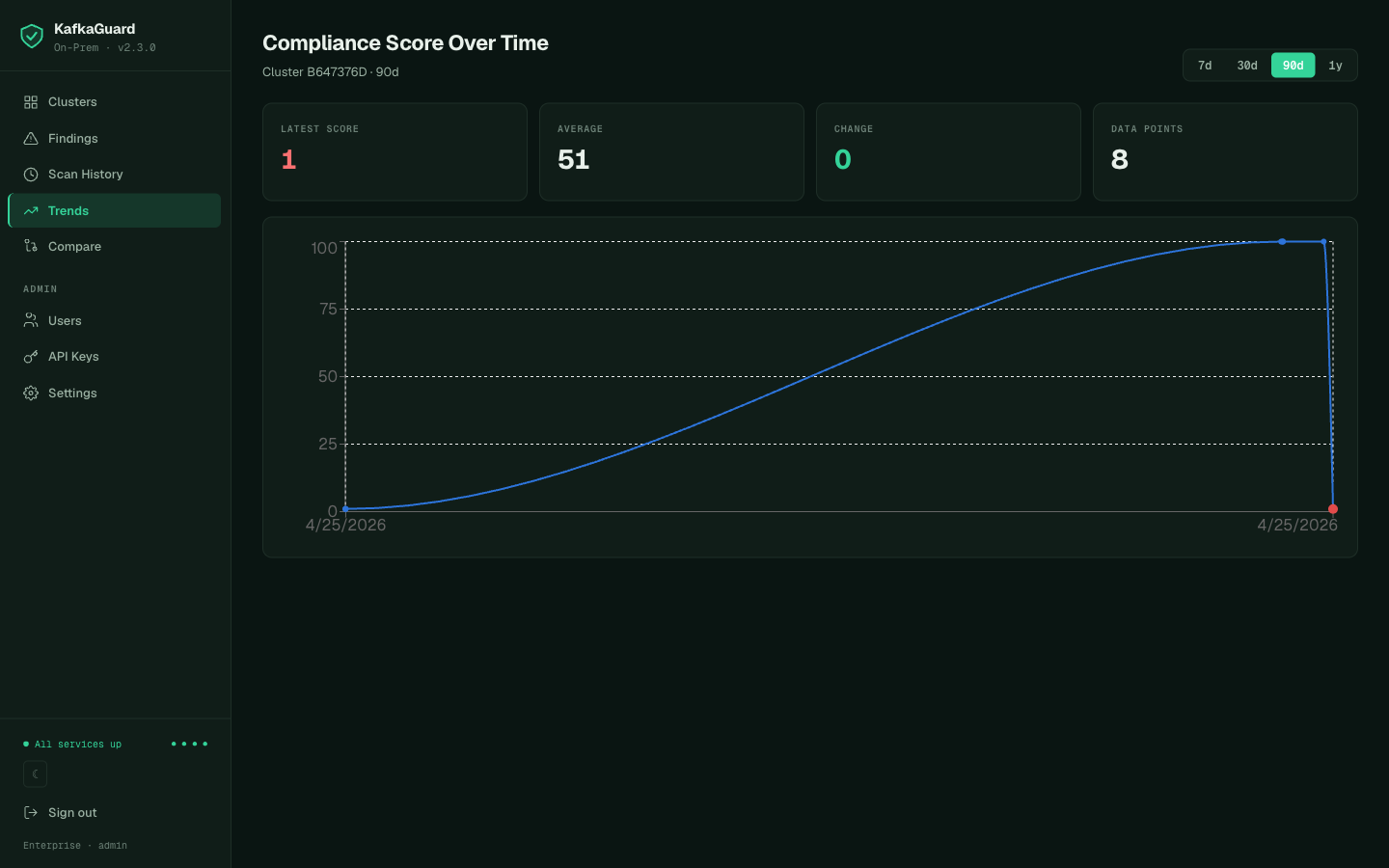
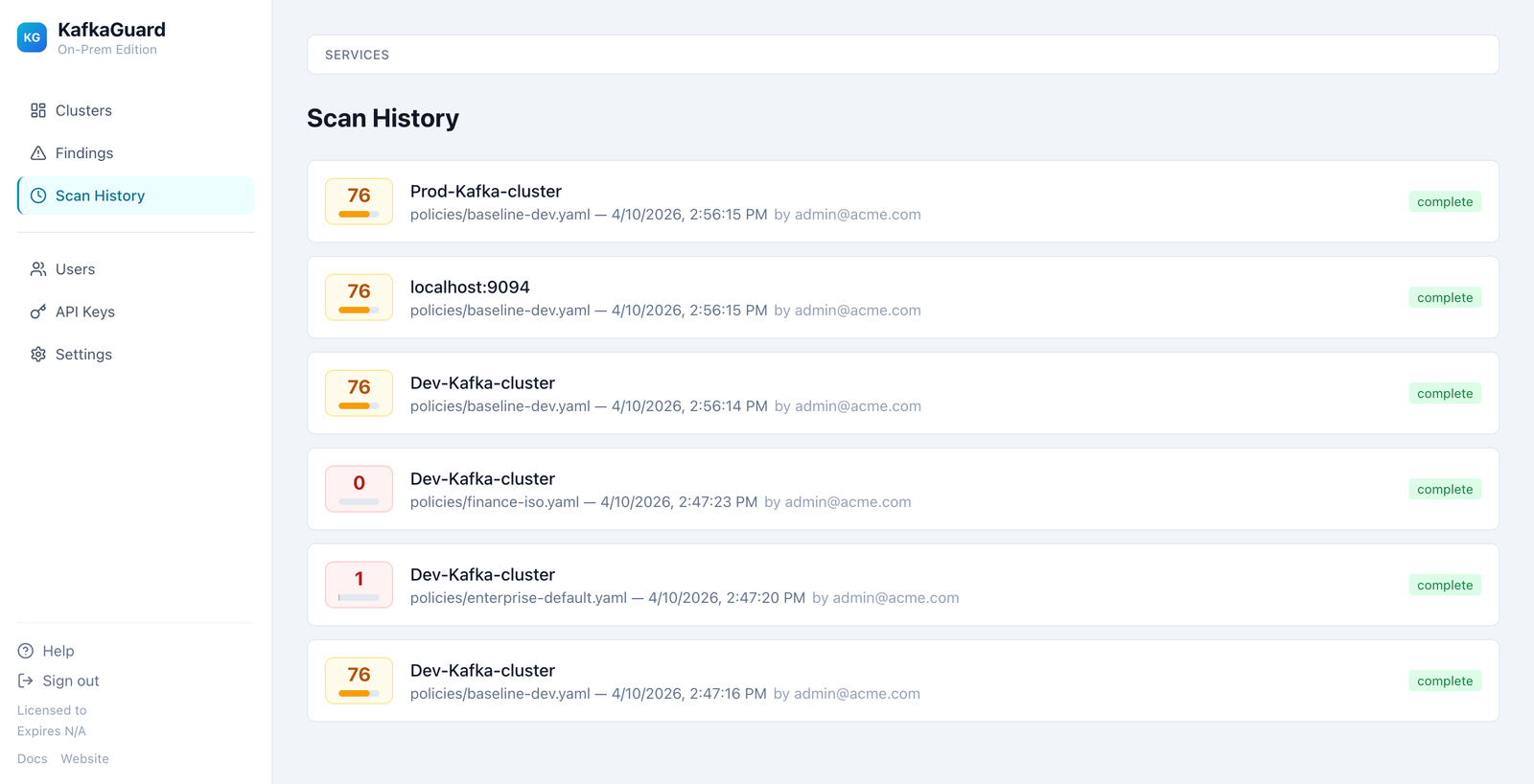
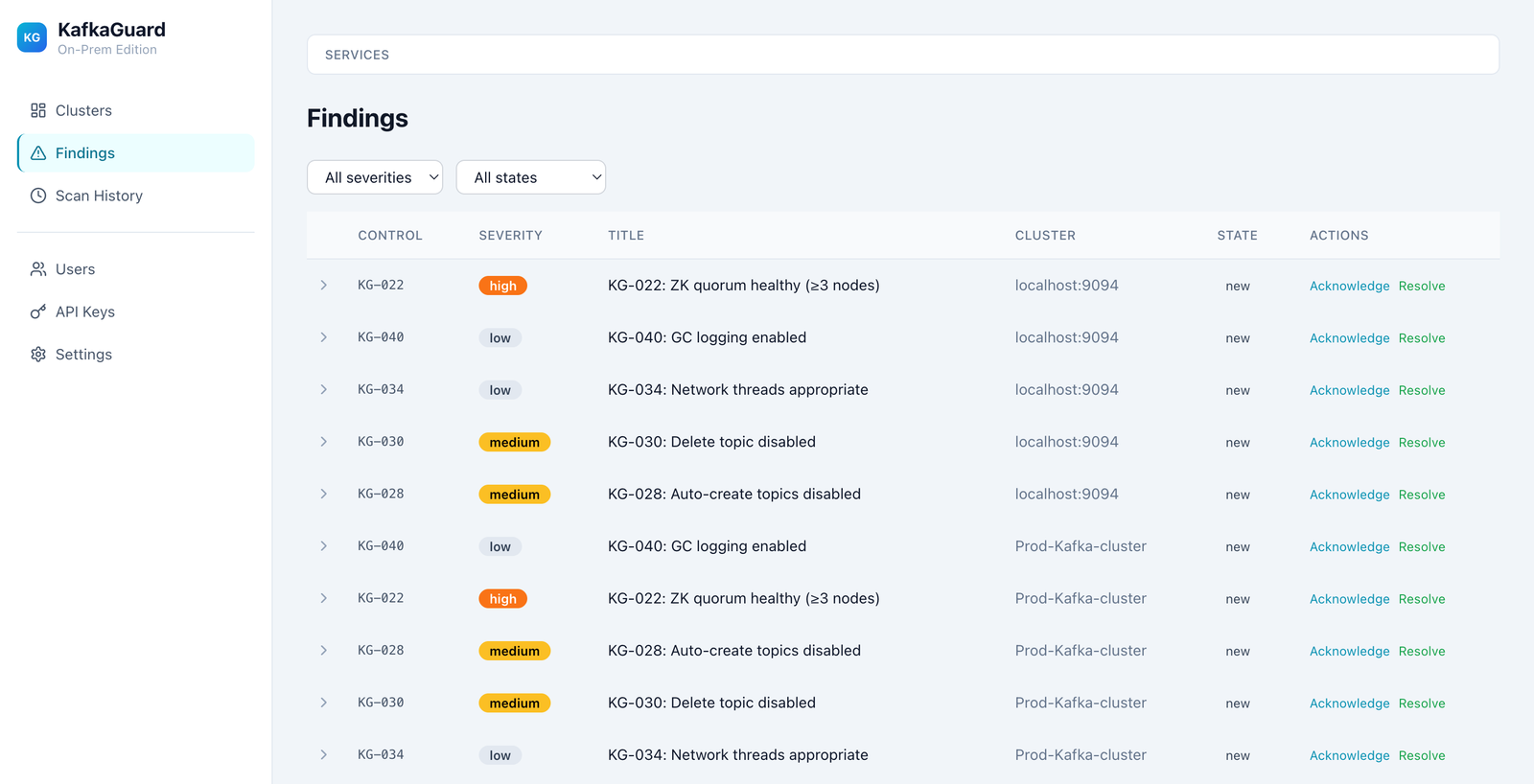
Turn this checklist into a 90-second scan. KafkaGuard evaluates your Apache Kafka cluster against 55 controls spanning SOC 2, PCI-DSS, and ISO 27001 — including audit logging, ACLs, RBAC, and encryption — and produces an audit-ready report. The Community tier is free forever. Grab the binary from GitHub Releases and scan your first cluster.